Industry 4.0 Demands a Future-Ready Workforce: Here’s the Playbook
Key Highlights
- Treat skills, not degrees, as the hiring signal; prioritize micro-credentials.
- Broaden pipelines to unlock innovation and growth.
- Mentorship and learning cultures reduce turnover in high-vacancy markets.
- Align industry, academia, and government to close the skills mismatch fast.

Manufacturing leaders are racing to deploy AI, robotics, and additive manufacturing, but the decisive advantage remains human. Skills-based hiring, micro-credentials, and hands-on programs can turn today’s capacity constraints into tomorrow’s growth vector. Executives should view talent as a capital allocation choice: fund reskilling, widen access, and demand measurable outcomes. In tight labor markets, mentorship and culture become retention levers that protect margins.
The strategy extends beyond plant walls. Cross-sector collaboration with universities, K-12 schools, and policymakers can synchronize supply with Industry 4.0 demand, while inclusive hiring taps into underutilized communities and global talent. The operational payoff: lower vacancy drag, higher productivity per headcount, and a more resilient capability stack. The excerpt below captures the article’s call to action and outlines practical pathways for leaders to take immediate action.
As reported by Noel H. Nevshehir in "Manufacturing Day 2025: Building a Skilled, Resilient, Future-Ready Workforce" on IndustryWeek:
“The U.S. economy is undergoing a fundamental shift. As Industry 4.0 advances, driven by artificial intelligence, advanced robotics and additive manufacturing, our nation faces a critical question: Do we have the workforce to compete and lead in this new era?
Recent global education benchmarks raise concerns, ranking American students in the middle of the pack in math and science despite high per-pupil spending. But the challenge before us is not insurmountable. In fact, it presents a moment of opportunity.
At Automation Alley, a Michigan-based nonprofit center working with manufacturers on digital transformation, we chose to confront this challenge directly with our ‘Future-Ready Workforce’ playbook, an actionable guide that has been viewed more than 100,000 times. This overwhelming response shows that business leaders, educators and policymakers are hungry for practical solutions.
Rather than lament gaps in our education or labor systems, we must focus on building a workforce that is skilled, resilient and future-ready.
At Automation Alley, we hear from manufacturers who are eager to adopt new technologies but struggle to find workers with the right skills. The issue is not just a talent shortage; it is a skills mismatch. Technological change has outpaced traditional education and training models, which is why we need bold and collaborative solutions across industry, academia and government.
A successful strategy begins with teaching existing workers new skills. According to McKinsey, hiring for skills is five times more predictive of job performance than hiring based on education alone. This means we must put a priority on practical programs that help individuals gain competencies that are in demand through micro-credentials, internships, co-op programs and technical certifications. Lifelong learning is no longer optional; it is a competitive necessity.
Too often, education policy and workforce needs exist in separate silos. That disconnect must end. Higher-education institutions are beginning to respond, offering flexible curricula and hands-on experiences that reflect the needs of modern industry. But we cannot stop there.
K-12 schools must also help spark early interest in STEM and skilled trades while nurturing essential skills such as critical thinking, creativity and adaptability. A strong foundation in math and reading, paired with exposure to technology, can prepare students not just for jobs but for lifelong success.”
Continue reading “Manufacturing Day 2025: Building a Skilled, Resilient, Future-Ready Workforce” by Noel H. Nevshehir on IndustryWeek.
Why It Matters to You
For executive teams, the workforce is now a strategic asset class. Skills-based hiring and micro-credential pipelines can expand capacity faster than recruiting alone, while inclusive policies unlock innovation and help meet production goals without overextending capex. Tie reskilling to throughput, quality, and scrap reduction metrics to show payback in quarters, not years.
Retention is the margin protector: mentorship, on-the-job training, and visible advancement pathways cut churn in a market with hundreds of thousands of openings. Coordinating with academia and K-12 schools seeds long-term supply while near-term upskilling derisks your automation roadmap.
Next Steps
- CEO/COO: Fund a skills-based hiring pilot tied to one line/cell; track yield, uptime, and training-to-productivity time.
- Chief People Officer/GM: Stand up micro-credential partnerships with local colleges for in-demand roles; set 90-day completion metrics.
- Plant Leadership: Launch a mentorship program (senior-to-apprentice) with quarterly retention targets and skill checklists.
- Policy/External Affairs: Join an industry-education-government consortium to align curricula with your skills map; report progress to the board.
- DEI/Talent: Broaden recruiting to underrepresented groups and skilled immigrants; measure applicant quality and promotion velocity.
 Quiz
Quiz
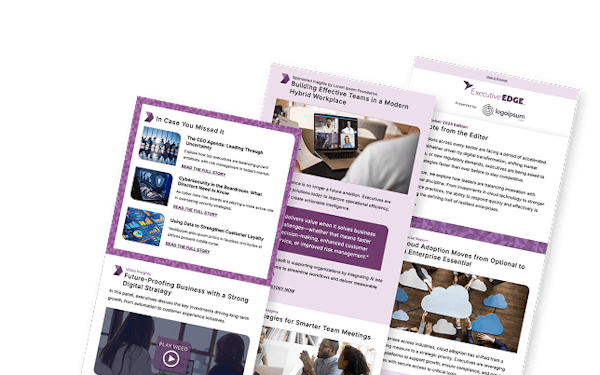
Your Competitive Edge, DeliveredMake smart decisions faster with ExecutiveEDGE’s weekly newsletter. It delivers leadership insights, economic trends, and forward-thinking strategies. Gain perspectives from today’s top business minds and stay informed on innovations shaping tomorrow’s business landscape.