Will Congress Finally Deliver Energy Permitting Reform?
Key Highlights
- Congress faces a year-end deadline to pass bipartisan permitting reform aimed at accelerating energy infrastructure development as electricity demand surges.
- Proposed reforms would shorten environmental reviews, limit legal challenges and reduce regulatory delays that can hold up major energy projects.
- Political divisions over clean energy approvals and environmental protections threaten to derail an agreement despite bipartisan support for reform.
- Permitting delays create ripple effects across the supply chain, postponing equipment orders and manufacturing investment even for companies that don't directly seek permits.
- Failure to reach an agreement before the new Congress convenes in January could force lawmakers to start over under a different political landscape.
Congress has a rare opportunity to pass major energy permitting reform, but time is running out.
The reforms would grease the skids for energy infrastructure projects by setting stronger review deadlines, reducing red tape and shortening the window for legal challenges as the nation races to meet skyrocketing power demand from the AI boom.
Advocates say the changes would create jobs and build all varieties of energy infrastructure, plus rail and transit, affordable housing and broadband internet.
There are reasons to think the bill can pass: bipartisan buy-in that the permitting system now leads to long, costly reviews that delay projects ranging from fossil fuels to clean energy; that demand for powering data centers is accelerating; and that reforms can lead to more affordable energy costs for consumers.
But — you guessed it — the clock is ticking.

Congress has until Jan. 3 to agree on the details, although lawmakers are expected to adjourn for the holidays shortly before Christmas.
Supporters suggest passing the reforms before the deadline will capitalize on what some believe is the best, last chance for meaningful change before political dynamics in the U.S. Capitol shift after the midterm election.
“There may never be 60 senators to vote on the same compromise after Democrats take over in January,” said Brandon Rottinghaus, a political science professor at the University of Houston and author of Scandal: Why Politicians Survive Controversy in a Partisan Era.
What's holding up bipartisan permitting reform?
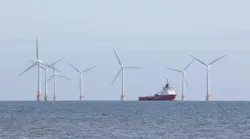
Despite Washington’s best efforts, permitting reform could fail for many reasons. Chief among them is the Democrats’ distrust of President Trump to approve clean energy projects after he pulled the plug on offshore wind projects (he already said he would not approve wind turbines as part of the reform, despite clean energy being a key element of the bill).
Another reason is concern from environmental and tribal groups that faster reviews will jeopardize their ability to protect significant lands and waters.
As a wildcard issue, Republicans who lost in the midterm election may not show up to vote.
But the biggest factor is political sentiment, especially following decisive Democratic wins in the midterm elections.
Although both parties helped craft the legislation, the proposal could split the Democratic caucus. Emboldened Dems who find flaws in legislation could oppose it in hopes of negotiating a better deal when they’re running the Congressional show in 2027.
Regardless, if Congress fails to reach agreement by Jan. 3, lawmakers have to start over. If they try next year, Democrats will have radically different priorities and likely face complications striking a deal Trump can agree to.
What the proposed permitting reform legislation would change
It’s too soon to say what a final agreement could look like as members try to hammer out the details, but below is a brief look at the major provisions lawmakers are talking about:
- Exempt certain projects from environmental impact reviews under the 1970 National Environmental Policy Act (NEPA) and reduce the amount of time environmental groups or communities have to sue from six years to 150 days.
- Instead of halting projects over environmental issues, courts would allow the project to continue while addressing the issue at hand.
- Create a higher bar for states to justify denials and conditions for water quality certification under the Clean Water Act.
- Streamline reviews required by the National Historic Preservation Act regarding how a project could affect historically or culturally important sites.
- Limit federal agencies’ ability to revoke issued permits.
- Allow companies to sue agencies that delay or deny projects stemming from a pattern of discriminatory treatment.
- Require data centers to pay their transmission costs instead of passing them on to electricity customers, a figure the bill sponsor estimates at $35 billion in savings to households over a decade.
Both chambers must agree on identical language for legislation to advance to the president, who has made permitting reform a priority.
How permitting delays affect energy infrastructure suppliers
Supporters say the bill would create more than 100,000 trade and manufacturing jobs.
That economic effect could ripple down to suppliers like Wisconsin-based UNICO, which builds power electronics connecting energy assets to the grid, such as grid-tie inverters for energy storage, microgrids and renewables.
UNICO doesn’t file permits itself, but its biggest bottlenecks are its customers’ project delays with interconnection and transmission. Customers may have storage or generation projects ready to build, but they often have to wait years for grid access and transmission to support them, tying up UNICO’s demand.
Even when a company earns permit approval, UNICO’s customers are hesitant to commit to equipment orders out of fear their project will get tied up in litigation, said Michael Canada, CEO of UNICO.
“When a storage project, transmission upgrade or industrial expansion sits in review for years, our equipment orders sit with it,” Canada said. “Faster, more durable permitting would turn more of our customers’ pipelines into shipped product, and more of the Wisconsin manufacturing jobs that build them, on a more predictable schedule.”
Why Congress may run out of time to pass permitting reform
Permitting isn’t Congress’ only heavy lift before closing out the year. The must-do list includes avoiding a government shutdown in December, voting on money for the war in Iran, extending expanded surveillance authorities, voting on Trump’s judicial appointments and passing a farm bill.
UNICO isn’t waiting on Congress to act before making hiring or investment decisions.
“The demand for a more capable grid isn’t going away,” he said. “But each year of delay keeps projects stuck in queues, keeps costs higher for customers and ratepayers and slows the domestic manufacturing growth that comes with building out the grid.”
“This is a rare bipartisan opportunity, and we hope Congress finishes the job,” he said.
About the Author
 Andrea Zelinski
Contributor
Andrea Zelinski is an award-winning freelance journalist with a passion for translating complex issues, trends and strategies into clear, engaging content to help people improve their businesses and their lives.
She spent 15 years as a political reporter covering state governments in Illinois, Tennessee and Texas, reporting from the halls of state capitols for publications including Texas Monthly, the Houston Chronicle and the San Antonio Express-News. In 2021, she shifted her focus to business journalism, joining Travel Weekly as senior cruise editor, where she covered the travel industry’s recovery from the COVID-19 pandemic.
When not reporting, Andrea is probably hiking. Known for embracing ambitious challenges, she hiked the entire Appalachian Trail in 2020 and the Pacific Crest Trail in 2025.
 Resources
Quiz
Related
 Magic 8 balls
 edge_voted_sticker_168255826_joaquin_corbalan_drea
 Your Competitive Edge, Delivered
Make smart decisions faster with ExecutiveEDGE’s weekly newsletter. It delivers leadership insights, economic trends, and forward-thinking strategies. Gain perspectives from today’s top business minds and stay informed on innovations shaping tomorrow’s business landscape.