In the supply chain industry, single-point failures can idle entire product lines, making dual sourcing a go-to resilience measure.
When dual sourcing is done well, it reduces dependency on any one supplier, improves negotiation leverage, and keeps customers whole when a plant, port, or shipping lane goes sideways. Done poorly, it adds contracts, emails, quality checks, and relationship management that quietly inflate overhead and dilute supplier commitment.
The difference lies in treating dual sourcing as a system design problem rather than a one-off procurement decision. Supply Chain Connect offers a four-step playbook for lean dual sourcing that translates across industries:
- Choose suppliers with financial stability, spare capacity, and strong quality systems
- Bake volume triggers and shared metrics into simple contracts
- Standardize specs, QC, ordering, invoicing, and packaging
- Centralize communication so you're not managing chaos via inbox
On the technology side, advanced planning and scheduling (APS) systems move decision-making away from spreadsheets and into rules-based engines, while IoT data and real-time inventory visibility reduce emergency buys and excess stock. Shared dashboards for on-time delivery, defect rates, lead times, and total landed cost keep both suppliers honest and surface issues early.
Looking ahead, the same logic applies whether you're sourcing chips, chemicals, or components. Regionalization reduces geopolitical and logistics risks, while ESG metrics are incorporated into the supplier scorecard to protect the brand and ensure compliance. Predictive analytics and AI layer on top, combining demand, weather, logistics, and performance data to flag disruptions early and suggest allocation shifts before you're in firefighting mode.
Dual sourcing is no longer a backup plan, but a strategy to enhance resilience and delivery continuity without ballooning overhead.
About the Author

Abby White
Vice President, Content Studio
As Vice President of EndeavorB2B’s Content Studio, Abby leads client-driven custom content programs across 90+ brands and the content strategy for topic and role-based newsletters serving executive audiences. An award-winning journalist with a marketer’s mindset, Abby brings 25 years of experience leading editorial, communications, marketing, and audience-building efforts across industries.
Abby launched her first magazine, Abby’s Top 40, in 1988 and made everyone in her family read it. While attending the University of Illinois, she paid her rent as a professional notetaker, which might explain why she still gets asked to take notes in meetings. Since then, she has held editorial leadership roles at an alt weekly, a newspaper, a luxury lifestyle magazine, a business journal, a music magazine, and regional women’s magazines, developing a sharp writing edge and a conversational tone that resonates with professional audiences.
She expanded into marketing while leading communications for an entertainment industry nonprofit and later drove rebranding and audience-building efforts for an NPR music station. At EndeavorB2B, she has been instrumental in driving editorial excellence, developing scalable content strategies across multiple verticals, and building the foundation for EDGE, the company’s portfolio of executive newsletters.
And if you’re a writer interested in contributing to ExecutiveEDGE, she’s the person you need to (politely) bug.
 Resources
Quiz
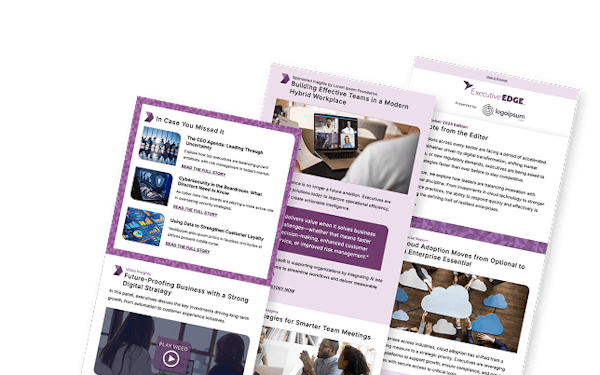
Your Competitive Edge, DeliveredMake smart decisions faster with ExecutiveEDGE’s weekly newsletter. It delivers leadership insights, economic trends, and forward-thinking strategies. Gain perspectives from today’s top business minds and stay informed on innovations shaping tomorrow’s business landscape.