Why Executives Are Rethinking Their 2027 Plans
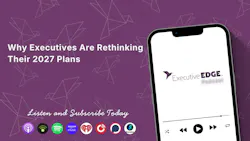

In this episode of ExecutiveEDGE, we examine what recent surveys of CFOs and CEOs reveal about the changing business outlook, where executives are adjusting their priorities and why resilience may be just as important as predicting what comes next.

Listen Here

The assumptions executives made at the beginning of 2026 may not look quite as solid heading into the final stretch of the year.

As leadership teams finalize their 2027 plans, renewed concerns around inflation, supply chains and costs are complicating an outlook that also includes resilient consumer demand and significant investment in AI.

In this episode of ExecutiveEDGE, we examine what recent surveys of CFOs and CEOs reveal about the changing C-suite outlook — and how executives are adjusting as familiar economic pressures return.

The data points to a difficult balancing act: Leaders need to control costs and build resilience while continuing to invest in the technologies and growth priorities that could position their organizations for what comes next.

What You’ll Learn

- Why CFO optimism about the U.S. economy has declined
- How inflation and supply-chain concerns are changing executive priorities
- Why cost control is returning to the forefront of the C-suite agenda
- What CEOs are reporting about the impact of AI on costs and revenue
- Why AI investments may not yet be delivering the savings some leaders expected
- How executives can use AI more strategically to identify and respond to changing business conditions
- Why resilience requires more than simply reacting to the next disruption

Why It Matters

Planning requires assumptions. But what happens when those assumptions change before the plan is even finished?

Executives heading toward 2027 are confronting a familiar combination of cost pressures, supply-chain uncertainty and economic volatility — while simultaneously being asked to invest in transformation and growth.

That makes the ability to recalibrate increasingly important.

The organizations best positioned for the next disruption may not be those that predict exactly what's coming. They may be the ones capable of recognizing changing conditions early, testing their options and adjusting priorities without losing sight of their longer-term strategy.


More from ExecutiveEDGE Podcast

Contributors:

About the Author

Geert De Lombaerde

Geert De Lombaerde

Contributor

A native of Belgium, Geert De Lombaerde joined EndeavorB2B in September 2021 to cover public companies, markets, and economic trends primarily for IndustryWeek, FleetOwner, Oil & Gas Journal, T&D World, and Healthcare Innovation. His work focuses on strategy, leadership, capital spending, and mergers and acquisitions, and he also works with Endeavor Business Intelligence on surveys and data projects.

Geert has been in business journalism since the mid-1990s. With a degree in journalism from the University of Missouri, he began his reporting career at the Business Courier in Cincinnati, initially covering retail and the courts before shifting to banking, insurance, and investing. He later was managing editor and editor of the Nashville Business Journal before being named editor of the Nashville Post in 2008. He led a team that helped grow the Post's online traffic by an average of more than 15% annually before joining Endeavor.

Quiz

Contributors:
mktg-icon Your Competitive Edge, Delivered

Make smart decisions faster with ExecutiveEDGE’s weekly newsletter. It delivers leadership insights, economic trends, and forward-thinking strategies. Gain perspectives from today’s top business minds and stay informed on innovations shaping tomorrow’s business landscape.
marketing-image