No matter the industry, watching a valued employee walk out the door hurts. Often, it's more than a people problem; it's an operational risk, and one that can be minimized by treating employee feedback, analytics, and retention like scheduled maintenance on your most critical assets.
In this example from Contractor, we explore how replacing one journeyman with a $60,000 salary will cost $30,000 to $120,000, before you even factor in lost service capacity. This is based on SHRM's estimates that replacing an employee can cost 50% to 200% of their annual salary.
In August 2025, 146,000 workers in the construction industry quit their jobs. We'll spare you the scary math on how much that cost the industry and instead focus on why people are leaving their jobs — and it's not just about compensation.
Sure, compensation matters, but across every age group, 36% of workers rank regular appreciation and feedback as the top engagement driver at work. However, only 14% to 15% of Gen Z and millennial workers say they feel engaged at work, while 43% to 47% say they want more appreciation and feedback. As your older workforce nears retirement, keeping your younger workers engaged is especially important.
Engagement alone won't fix deeper issues like lack of growth opportunities, outdated tools and equipment that make work slower and harder, or scheduling chaos that disrupts work/life balance, but it creates the trust needed for honest conversations about those problems. When people feel valued, they'll tell you what's broken. When they don't feel valued, they quit.
Treating retention as part of your company's infrastructure isn't as hard as it sounds. Managers can start with individual weekly check-ins with team members, public recognition for successes, and tracking feedback and progress for future benchmarking. None of these things requires new software (although it will be easier to track progress if your analytics are organized and easily accessible). Integrating other analytics — depending on your industry, these could include timesheets, completion rates, callback trends, customer feedback scores, overtime patterns, and changes in participation — helps you focus on the employees who are still reachable.
For any industry built on specialized talent and customer trust, it's worth your time to implement a system to spot disengagement early. It's far cheaper (and far more strategic) than rebuilding service capacity after your best employees walk out the door.
About the Author
 Abby White
Abby White
Vice President, Content Studio
As Vice President of EndeavorB2B’s Content Studio, Abby leads client-driven custom content programs across 90+ brands and the content strategy for topic and role-based newsletters serving executive audiences. An award-winning journalist with a marketer’s mindset, Abby brings 25 years of experience leading editorial, communications, marketing, and audience-building efforts across industries.
Abby launched her first magazine, Abby’s Top 40, in 1988 and made everyone in her family read it. While attending the University of Illinois, she paid her rent as a professional notetaker, which might explain why she still gets asked to take notes in meetings. Since then, she has held editorial leadership roles at an alt weekly, a newspaper, a luxury lifestyle magazine, a business journal, a music magazine, and regional women’s magazines, developing a sharp writing edge and a conversational tone that resonates with professional audiences.
She expanded into marketing while leading communications for an entertainment industry nonprofit and later drove rebranding and audience-building efforts for an NPR music station. At EndeavorB2B, she has been instrumental in driving editorial excellence, developing scalable content strategies across multiple verticals, and building the foundation for EDGE, the company’s portfolio of executive newsletters.
And if you’re a writer interested in contributing to ExecutiveEDGE, she’s the person you need to (politely) bug.
 Resources
Quiz
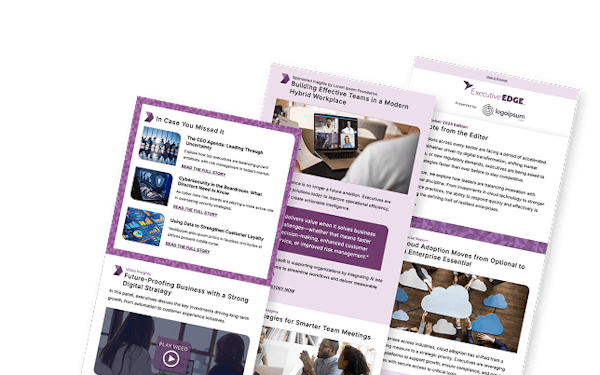
Your Competitive Edge, DeliveredMake smart decisions faster with ExecutiveEDGE’s weekly newsletter. It delivers leadership insights, economic trends, and forward-thinking strategies. Gain perspectives from today’s top business minds and stay informed on innovations shaping tomorrow’s business landscape.