Hybrid, Remote and RTO: Framing the Workspace Debate for ’26
Key Highlights
- Recent studies show stable remote work levels indicating that workers and their managers have settled on a new normal.
- Tailored work arrangements are linked to higher employee satisfaction and greater retention, emphasizing the need for transparency and trust.
- Effective hybrid work requires clear communication, managerial tools, and employee involvement to foster fairness and organizational cohesion.
Is this the year you’ll roll out a return-to-office mandate? Or stated differently: Is this the year you’re willing to risk a brain drain?
The debate around remote work, hybrid work and the claimed need to have as many people as possible together in office spaces has raged on and off since we put the darkest days of the COVID-19 pandemic behind us. Last year, large parts of the federal government and technology and financial giants Meta Inc. and JPMorgan Chase & Co. generated headlines with back-you-come mandates.
Still, recent research from Gallup shows that the facts on the ground (read: in cubicles and offices) appear to be pretty settled. Consider:
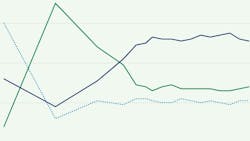
- In mid-2022, after leaders and their teams had worked out the new normal of work, Gallup says the share of exclusively remote workers among U.S. employees able to work away from the office stood at 29%. In May of 2025, that number was 28%.
- Hybrid workers’ share of the total remote-capable workforce stood at 49% in June 2022. Last May, it was 51%. And the time that cohort spent in the office rose only slightly in that time frame, from 43% to 46%.
- The share of fully on-site employees — which had been 60% in 2019 — was 22% in the middle of 2022. Nearly three years later, it was 21%.
- Another sign that supervisors and their reports have found an equilibrium: “The percentage of employees who say their employer or leadership determines their hybrid work schedule has not changed for the past two years.”
The arguments for calling back teams have been well fleshed out: Collaborating in person with teammates makes for a more productive workplace. It also fosters greater innovation at organizations where that’s prized. And on the financial side, it better uses expensive real estate.
Research has by now also shown the downside to RTO mandates. A JPMorgan survey of its workers after it rolled out RTO showed a drop in the number of people saying their work-life balance and well-being are a corporate priority. And an academic paper first published in November 2024 that tracked more than 3 million tech and finance workers at 54 large companies showed that the average turnover rates at those organizations rose 14% after employees were ordered back. Also striking from that research: Those departures were more highly concentrated among women, mid- and top-level managers and more highly-skilled employees.
 69385f78446d480ccd372712dreamstime_s_179539030
 hiddenbench
On a more positive note: An HP Inc. report from 2024 detailed that nearly seven out of 10 employees say having “a tailored or customized approach to work” that has flexibility in terms of time as well as location would improve their relationship with their work and make them more likely to stay longer at their companies.
So, how to get the balance right?
Mary Jo Swearingen, HR leader at LBMC Employment Partners, said transparency is paramount in an organization tacking this way or that. It’s hard to envision a future in which 90% of eligible workers are in the office full-time so communicating clearly from a foundation of trust can go a long way, she said. It’s vital to make the business case for an RTO mandate — people will quickly sniff out the idea that such a move is being made to push through “stealth layoffs” — and to be clear about what is up for compromise when manager and employee aren’t aligned.
In addition, Swearingen said, organizations should be giving managers at various levels tool to help them define success and consistently manage this dynamic. Those points and others, she added, can speak to a company’s broader culture and the relationships among its various constituencies.
“If you have an issue with return-to-office, it’s probably due to a lack of trust or an issue with the empowerment of your people,” Swearingen said.
The team at Gallup puts it this way: “Hybrid is a team sport.” Giving employees a say in how their weeks are structured improves the chances that they view such an arrangement as fair. A twist here: “91% of employees who say their team decides their hybrid work schedule see their hybrid work policy as fair — the same rate as those who determine it themselves.”
Perhaps the questions at the beginning of this story should be rephrased thus: Is this the year you’re willing to test just how healthy your corporate culture is?
About the Author
 Geert De Lombaerde
Geert De Lombaerde
Contributor
A native of Belgium, Geert De Lombaerde joined EndeavorB2B in September 2021 to cover public companies, markets, and economic trends primarily for IndustryWeek, FleetOwner, Oil & Gas Journal, T&D World, and Healthcare Innovation. His work focuses on strategy, leadership, capital spending, and mergers and acquisitions, and he also works with Endeavor Business Intelligence on surveys and data projects.
Geert has been in business journalism since the mid-1990s. With a degree in journalism from the University of Missouri, he began his reporting career at the Business Courier in Cincinnati, initially covering retail and the courts before shifting to banking, insurance, and investing. He later was managing editor and editor of the Nashville Business Journal before being named editor of the Nashville Post in 2008. He led a team that helped grow the Post's online traffic by an average of more than 15% annually before joining Endeavor.
 Resources
Quiz
Your Competitive Edge, DeliveredMake smart decisions faster with ExecutiveEDGE’s weekly newsletter. It delivers leadership insights, economic trends, and forward-thinking strategies. Gain perspectives from today’s top business minds and stay informed on innovations shaping tomorrow’s business landscape.