How Boards Can Assess Geopolitical Risk and Protect Business Strategy
Key Highlights
- Not every geopolitical headline represents a material business risk. Boards should focus on developments that directly or indirectly affect their organization's operations, financial performance, supply chains and strategic priorities.
- Geopolitical risk extends far beyond national borders. Trade restrictions, sanctions and regional conflicts can create second- and third-order consequences through suppliers, customers, financial institutions and other business dependencies.
- Effective board oversight requires actionable intelligence, not more information. Executives should translate geopolitical developments into specific business exposures, potential consequences and strategic decisions rather than overwhelming directors with global news.
- Scenario planning is more valuable than attempting to predict geopolitical outcomes. By evaluating multiple scenarios and their potential business impacts, organizations can identify vulnerabilities, establish response triggers and prepare before disruption escalates.
- Persistent geopolitical disruption may require a fundamental strategic reset. When tactical adjustments are no longer sufficient, boards must be prepared to reconsider sourcing, investment, market participation and other assumptions underlying long-term business strategy.

TL:DR: Geopolitical risk is no longer a distant concern for corporate boards. It is a critical factor shaping business strategy, operations and financial performance. As trade restrictions, regional conflicts, sanctions and shifting global alliances create increasingly complex challenges, executives must distinguish geopolitical noise from developments that pose material business risks. By identifying critical dependencies, evaluating potential downstream consequences and incorporating scenario planning into strategic discussions, boards can move beyond reacting to headlines and make more informed decisions. The goal isn't to predict every geopolitical disruption, but to ensure organizations have the insight, flexibility and strategic options to respond before risks become crises.
A trade dispute erupts between two countries thousands of miles from a company's headquarters. At first, it seems like another geopolitical headline. Important, perhaps, but far removed from daily operations. Then new tariffs drive up the cost of critical inputs, suppliers face unexpected restrictions and operating margins begin to shrink. Suddenly, executives are reconsidering pricing, sourcing and capital investment. What began as a diplomatic disagreement has become a strategic business decision.
For corporate boards, this is an increasingly familiar challenge. Geopolitical developments rarely remain confined to the countries or industries where they originate. Trade restrictions, regional conflicts, sanctions and shifting international alliances can ripple through interconnected supply chains, financial markets and commercial relationships. Yet not every headline warrants a boardroom discussion. The challenge is determining which developments could materially affect the business … and translating that uncertainty into informed decisions.

Himamauli (Him) Das has spent much of his career at the intersection of geopolitics, economics and national security. A former senior official at the U.S. Treasury Department and White House, Das now serves as senior managing director and counsel at K2 Integrity, where he advises boards, executives and multinational organizations on geopolitical risk, economic security, sanctions and regulatory strategy.
From his perspective, the global economic environment has undergone a fundamental transformation: The relatively stable framework of free trade and globalization has increasingly given way to one shaped by national-security priorities, strategic competition and economic restrictions.
How can boards identify material geopolitical risks?
The changing relationship between economic policy and national security means geopolitical developments can affect business operations more directly than in previous decades. Governments increasingly use tariffs, sanctions, export controls and investment restrictions to advance strategic objectives, extending geopolitical considerations into commercial activities once viewed as routine.
But that doesn't mean boards should react to every international development.
"Not every geopolitical event or political development translates into material business risk," Das explains.
Instead, he recommends beginning with the business itself. Executives should understand their critical suppliers, customers, counterparties, financing sources, technologies and operational dependencies. With those exposures clearly identified, they can assess whether a geopolitical event has a meaningful connection to the organization.
One particularly important signal is how governments respond. A regional conflict or diplomatic disagreement may have limited immediate consequences for a company, but subsequent sanctions, tariffs or export controls can quickly change its commercial implications.
The distinction is essential: Boards need to understand not simply what's happening in the world, but what those developments could mean for their organization.
Assessing direct and indirect geopolitical risk across the business
Identifying material geopolitical risks requires looking beyond a company's direct operations.
A new trade restriction might not apply to the organization itself but could affect a critical supplier, lender, logistics provider or customer. A regional conflict could disrupt energy markets, transportation routes, or access to essential commodities, affecting businesses with no physical presence in the affected region.
Das encourages executives to examine both direct and indirect exposure across supply chains, financing, technology, market access, regulatory obligations and growth plans.
That includes identifying concentrations and single points of failure throughout the business ecosystem, not just among immediate suppliers, but also sub-suppliers, counterparties, technology providers and critical infrastructure.
The importance of this broader perspective becomes apparent when geopolitical events trigger second- and third-order consequences. An organization may initially believe it is insulated from a development, only to discover that a supplier's exposure or a change in financing conditions creates an unexpected vulnerability.
Trade and tariff disputes offer a practical example. What initially appears to be a government-to-government disagreement can force companies to reconsider supplier concentration, pricing, margins and capital investment.
The lesson for boards is that geographic distance does not necessarily translate into business insulation.
How to communicate geopolitical risk to the board
Even when executives identify meaningful geopolitical exposure, communicating that risk effectively presents another challenge.
Board members need sufficient information to understand emerging threats without becoming overwhelmed by every international development.
Das recommends a three-part approach.
- First, identify the geopolitical developments that could actually matter. Management should explain which events have a plausible connection to the company's markets, suppliers, counterparties, technologies or strategic priorities.
- Second, translate those developments into business consequences. Rather than simply describing a conflict or policy announcement, executives should outline potential operational and financial implications, relevant exposures and plausible scenarios.
- Third, explain what management is doing about them. What mitigation measures are available? Which decisions might become necessary? And what developments would move an issue from monitoring to action?
This approach shifts the boardroom conversation from geopolitical awareness to strategic preparedness.
Scenario planning is especially important because geopolitical events rarely follow a predictable path. Das recommends planning at two levels: First, examining how the geopolitical event itself could evolve; then assessing how each potential outcome could affect the organization.
Rather than relying on a single forecast, executives should consider alternative pathways, identify indicators associated with each scenario, and reassess them as circumstances change.
The objective isn't to predict every geopolitical outcome. It's to understand how different outcomes could influence the business and preserve the ability to respond.
When geopolitical risks require a change in business strategy
Not every geopolitical disruption requires a fundamental change in strategy.
Organizations may initially respond by increasing inventory, changing suppliers, diversifying counterparties or strengthening compliance controls. These tactical adjustments can help manage immediate exposure while preserving operational flexibility.
But boards must also recognize when a temporary disruption is becoming a structural challenge.
According to Das, the strategic question arises when tactical measures no longer adequately address the underlying risk, or when maintaining flexibility becomes more costly than the value of keeping options open.
Persistent sanctions, trade restrictions, political tensions or competing regulatory regimes may require executives to reconsider more fundamental assumptions about where the organization invests, sources materials, manufactures products or conducts business.
At that point, geopolitical risk management becomes inseparable from corporate strategy.
The board's responsibility is not simply to ensure management has contingency plans. It's to challenge whether the assumptions supporting existing business decisions remain valid.
Five questions boards should ask about geopolitical risk
For boards seeking a more disciplined approach to geopolitical risk over the next 12 to 18 months, Das recommends starting with five fundamental questions:
- Where is our potential geopolitical exposure?
- Which developments could materially change that exposure … positively or negatively?
- Should we stress-test our strategy against different geopolitical scenarios?
- What second- and third-order consequences could affect our stakeholders?
- Do we have a response plan?
These questions encourage directors to move beyond monitoring geopolitical developments and toward evaluating their implications for enterprise performance and resilience.
Ultimately, boards cannot control international conflicts, government policy or shifting global alliances.
Nor can executives predict precisely how those developments will unfold.
What organizations can control is how well they understand their vulnerabilities, evaluate emerging threats, and prepare strategic alternatives.
As Das emphasizes, the objective is to understand how geopolitical developments translate into business consequences, and ensure management has options before a risk becomes a crisis.
About the Author
 Jess Mand
Contributor
Jess Mand is an award-winning communications strategist and founder of INDEMAND Communications, where she helps organizations translate complex ideas into clear, compelling narratives that drive connection and action. She partners with Fortune 500 companies, growth-stage firms, and mission-driven organizations to design communication strategies, content programs, and experiential campaigns that engage employees and elevate leadership messages. Known for her creative storytelling and pragmatic approach, Jess brings a rare blend of strategic insight and human-centered perspective to every project she leads.
 Resources
Quiz
Related

 edge_tree_184790178_martin_thomas_dreamstime
 Closeup of pointing to a football strategy plan drawn on a virtual screen. Your Competitive Edge, Delivered
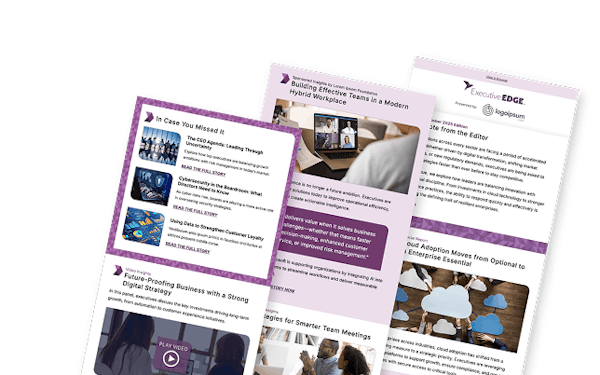
Make smart decisions faster with ExecutiveEDGE’s weekly newsletter. It delivers leadership insights, economic trends, and forward-thinking strategies. Gain perspectives from today’s top business minds and stay informed on innovations shaping tomorrow’s business landscape.